
Managing 18-Month Lead Times: Wrapping as a Bridge to Permanent Repair
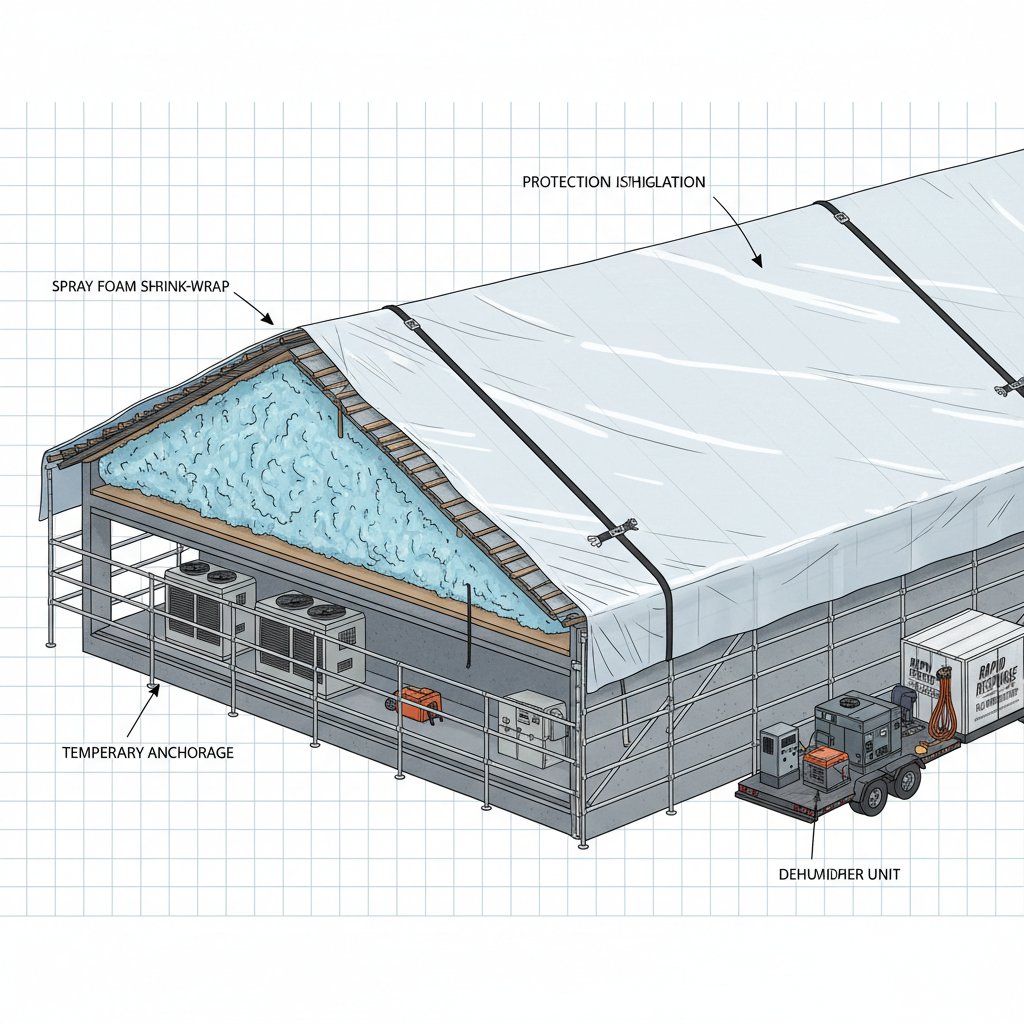
How to manage long-term roof exposures caused by material shortages and contractor backlogs using engineered shrink wrap systems.

How to manage long-term roof exposures caused by material shortages and contractor backlogs using engineered shrink wrap systems.

Understanding OSHA 29 CFR 1926 compliance during emergency roof stabilization and temporary enclosure installation.

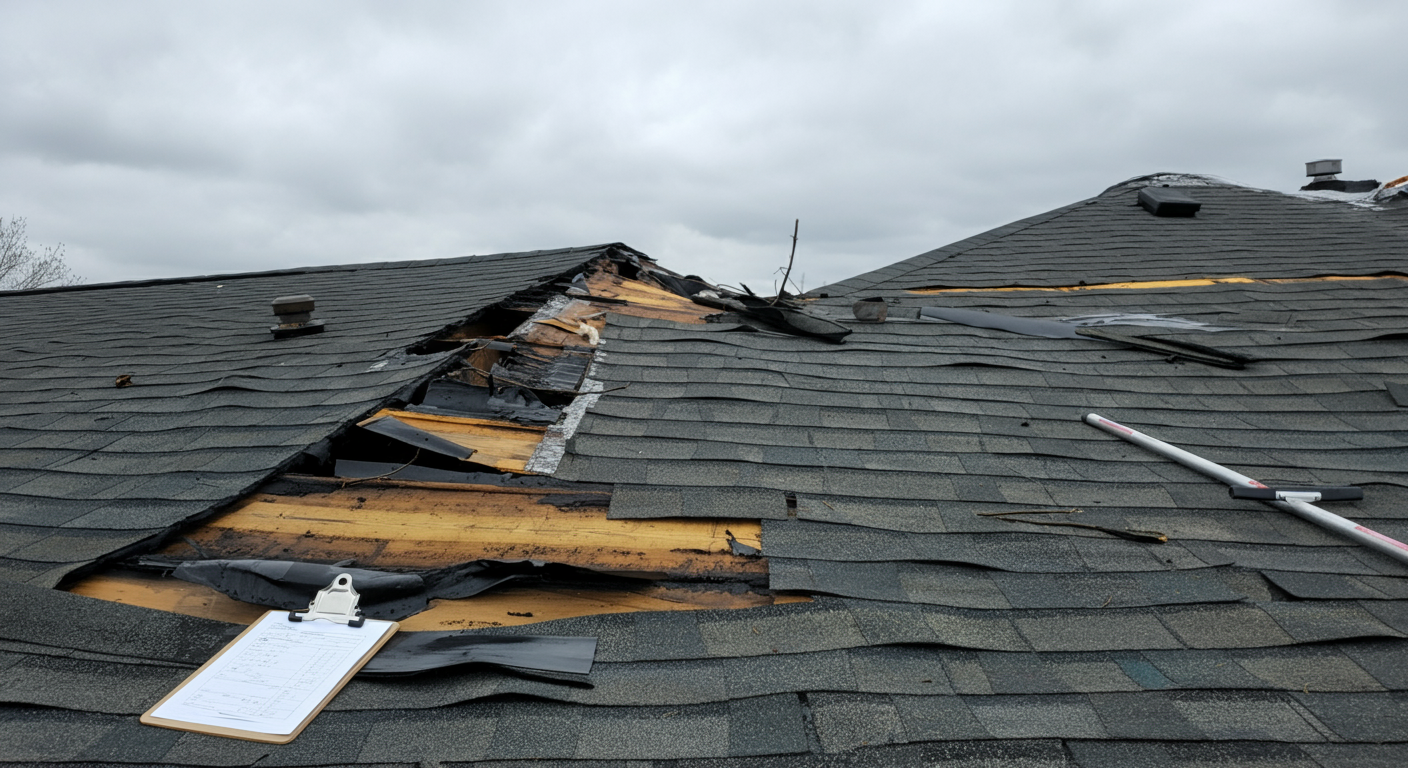
Hail damage is one of the most common reasons for emergency roof wraps in spring. What hail does to your roof, when you need a wrap, and how to document for insurance.

Professional shrink wrap roofs last 3–12 months depending on film spec, UV exposure, and climate. How to assess your wrap’s condition and when to renew before it fails.

Financial comparison for CFOs and Facility Managers. Calculating the Return on Investment (ROI) of shrink wrap vs tarps considering business continuity and secondary damage.

The physics of wind uplift on temporary roof covers. Why heat-sealed shrink wrap survives 100mph winds while blue tarps fail at 40mph. Bernoulli’s principle explained.

Safety guide for General Contractors. OSHA regulations regarding fall protection, fire safety, and hazardous materials during emergency roof wrapping.

Protecting heritage sites and historical buildings after storm damage. How to use scaffolding and shrink wrap without damaging delicate masonry or structures.

Essential Xactimate codes for emergency shrink wrap services. Guide for adjusters and contractors on line items for 12-mil wrap, sandbags, and framing.

Specialized emergency roofing for sensitive industrial facilities. How shrink wrap prevents contamination in food processing and chemical plants after storm damage.