
Industrial GMP Compliance: Managing Roof Breaches in Food Plants
How to maintain Good Manufacturing Practices (GMP) and FDA compliance after a roof failure using industrial-grade containment systems.

How to maintain Good Manufacturing Practices (GMP) and FDA compliance after a roof failure using industrial-grade containment systems.

A technical briefing on using heat-welded shrink wrap to meet Infection Control Risk Assessment (ICRA) Class IV standards during emergency roof repairs.

Hail damage is one of the most common reasons for emergency roof wraps in spring. What hail does to your roof, when you need a wrap, and how to document for insurance.

Insurance covers emergency roof wrap when you follow the right process. What documentation you need, how to submit the claim, and why StormWrappers’ documentation package makes it easier.

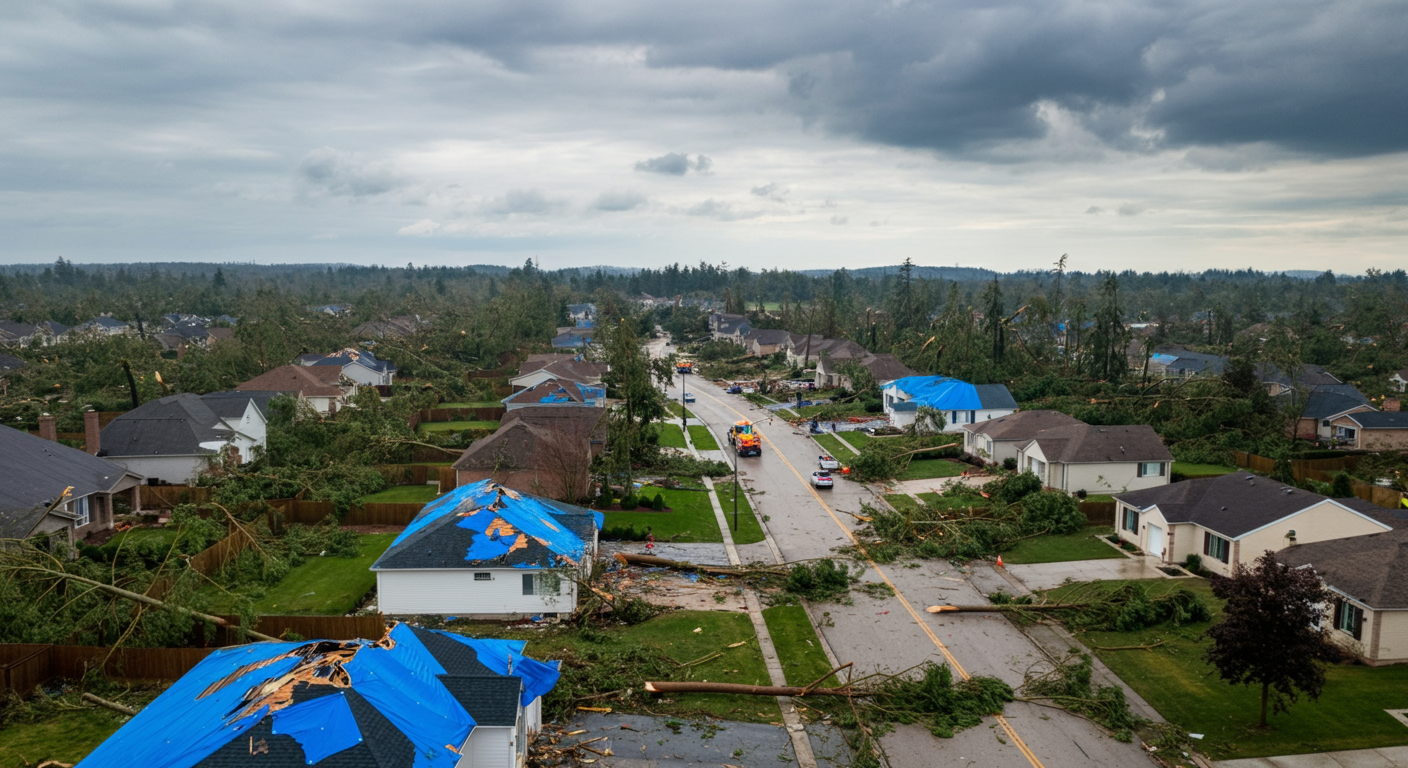
Tornado season peaks April–June in the Midwest and Southeast. Roof prep, post-tornado damage response, and when emergency shrink wrap is the right call for tornado damage.

Ice storms cause unique and often hidden roof damage. Here is how to assess ice storm damage, prevent ice dams, and protect your property through recovery.

Tornado roof damage assessment guide — what damage patterns to document, immediate safety steps, and how to protect your property before repairs begin.

Understand wind resistance ratings for roofing materials, what fails first in storms, and why a temporary dry-in is the bridge to a better roof.

Mold starts within 24–48 hours of moisture. A professional shrink wrap dry-in after storm damage stops the water intrusion that starts the mold clock.

Secondary damage from storm events — mold, structural damage, destroyed interiors — is preventable with proper shrink wrap dry-in. Here is how it works.